
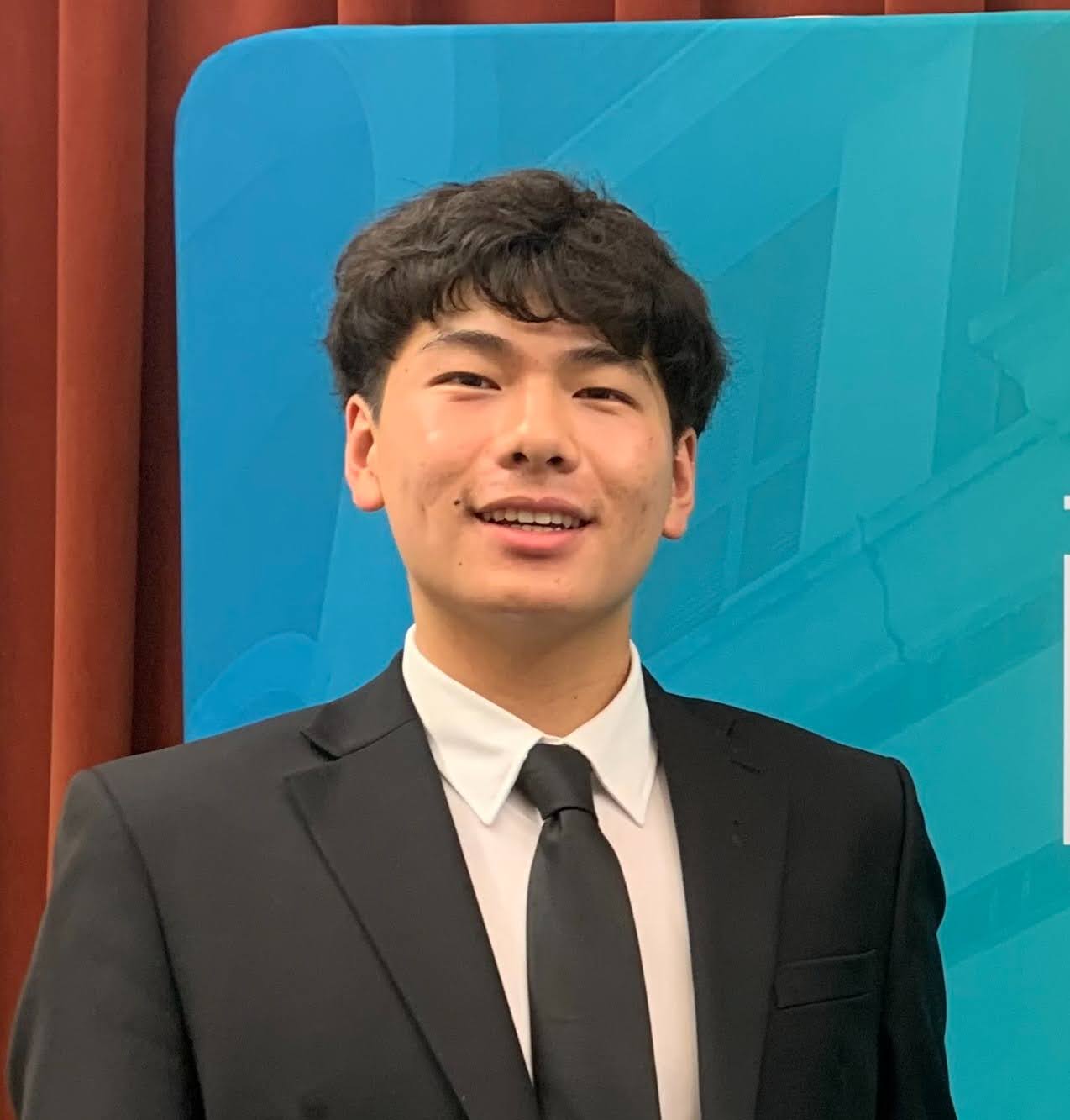
Photo courtesy of Angelo Chen
Angelo Chen, a senior in the Rice Medical Humanities Program, has been at the forefront of research in the Texas Medical Center and internationally, demonstrating the importance of patient narratives in medicine. Angelo was a recipient of the Owl Edge Summer Experience Fund from Rice's Center for Career Development (CCD) in Summer 2025, which he used to travel to Singapore. There, he conducted research on the importance of narratives in medicine in a public hospital, exploring the cultural nuances of patient-provider communication. This summer, Angelo worked on developing a Narrative Medicine curriculum for students at the University of Edinburgh Medical School. We sat down with him to learn more about his projects, experiences, and advice for other students.
What inspired this project?
I’ve been doing "narratives in medicine" work here at Rice and Houston through the Medical Humanities program, and I wanted to be able to experience and apply that in a different setting. Also, on a personal note, I wanted to go abroad and experience a new culture. So, to do both of those goals, I thought it'd be perfect to go somewhere outside the US and do narrative research in medicine.
Narratives in Medicine is a niche field. How did you find this specific opportunity in Singapore?
It was a challenge. Narratives in medicine is a pretty niche thing, and I had a key requirement: I needed to be able to talk to the patients and providers, so I had to be in an English-speaking country. The National University of Singapore (NUS) and Duke have a partnership with the public hospital system there, and one of their sub-groups was focused on "narrative-type work." I just reached out to the coordinator for that, sent my resume, and set up a meeting. It was a perfect pairing. The field is a lot newer in Singapore than in the US, so the doctors I worked with hadn't actually carried out any sort of study like this before. Because I had that background, they had confidence I could handle the work and gave me a lot of independence.
What was the research process like? Can you explain "narratives in medicine" for those unfamiliar with it?
At its core, we all would believe that if a doctor knows you better—beyond your medical stuff, knows who you are as a person—they'd probably be able to provide better care. My work is basically gathering these non-medical life stories from patients and presenting them to providers. We're using stories as a bridge for providers to get to know their patients better, and then evaluating the impact of that. I did this work in a Pediatric ICU (PICU), which was a setting I was already familiar with from my work in Houston. The project in Singapore was technically classified as Quality Improvement (QI), which is focused on improving how we run things in the hospital. This was a slightly different classification from the formal IRB (Institutional Review Board) protocol I worked under in Houston, but the day-to-day work was very similar.
What was the biggest difference between conducting this research in Houston versus Singapore?
The day-to-day tasks were relatively similar, but the big— very big—difference is culture. I had a pretty hard time adjusting to the communication style in Singapore. For example, in Houston, if I ask a parent, "Tell me about your child," they can ramble for five minutes, and I can just sit there and listen. In Singapore, communication in a medical setting is more succinct. If I ask, "What does your child like?" they'll be like, "Pretzels, sometimes ice cream." There's no elaboration. In Houston, it was like we were having a conversation during these interviews. In Singapore, it felt like I was an interviewer and they were an interviewee. Adjusting to that cultural difference and learning to accommodate for it was the primary difference in the research.
What was the experience like outside of the hospital?
It was great. Singapore has an amazing food scene. They have these places called Hawker Centers, which are like food centers that are cheap but serve really high-quality food. I ate at Hawker Centers quite regularly. For fun, I played pickleball with some Singaporean young professionals once a week. I also went on some weekend trips. I went to Thailand and Vietnam—it was really fun, good food as well, and really cheap plane tickets since it's all in the region.
What advice do you have for other students seeking funding for international research?
I would say that "research abroad" is a very niche category to get funded, so it was pretty difficult. I applied to the Center for Career Development (CCD), which has the Owl Edge Summer Experience Fund for summer experiences. I got some help from people at the CCD to guide me through the application, and I was fortunate to get the funding. I'd also just give a shout-out to my mentors in Singapore. I worked very closely with a nurse and a doctor who were running the program. They were incredible people and gave me a lot of freedom, which I really appreciated. They're great mentors.
What's next for this project?
We're currently working on a scoping review of narrative interventions, drawing on the work from this research. Because the project was classified as Quality Improvement, it's slightly harder to use the actual patient stories in a formal publication, but we're still figuring out exactly how we want to use that data.
What are you working on right now?
This summer, I am working at the University of Edinburgh Medical School on a project focused on designing and teaching a narrative medicine curriculum for medical students. I'll be responsible for creating learning and reflection activities that explore how stories can shape students' understanding of illness, identity, and patient care. I aim to encourage medical students to engage with patient stories not as supplementary context but as clinical tools. The goal of this project is to improve the integration of narrative medicine into medical education.
How has your research evolved in Edinburgh?
I've really honed my ability to design modules that not only teach the concepts I'm trying to teach, but that feel clinically relevant. The lessons are for future doctors after all. I've also branched into other aspects of medical education beyond narrative medicine during my work in Edinburgh, from Global Inequities to Environmental and Health. It's been fun developing my curriculum design and teaching skills in these new niches.