
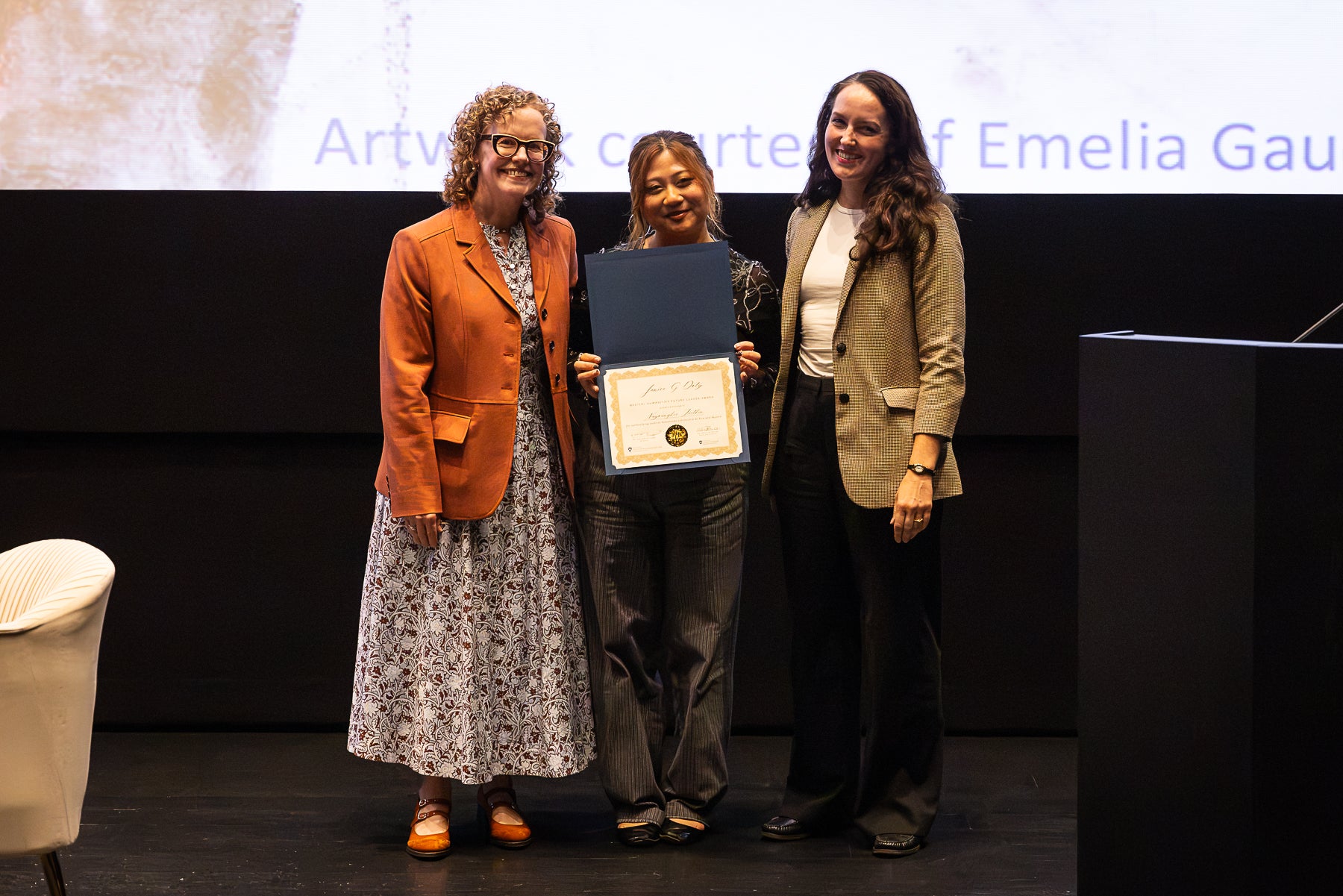
Pictured from left to right: Kirsten Ostherr, Nayounghee Tuetkin, Katherine Shwetz
Photo credit: Lynn Lane
Mentors, students, alumni, and friends gathered on October 28 to celebrate Rice Medical Humanities’ 10-year anniversary. In addition to an alumni panel discussion with Annesha Dey (’26), Sriya Kakarla (’24), and Annika Nambiar (’23) and poster presentations by current students, Nayounghee Tuetkin was announced as the recipient of the 2026 Janice G. Doty Medical Humanities Future Leader Award.
The award, named in honor of distinguished Rice alumna and former Board of Trustees member Janice G. Doty (’60), was established through the generosity of her husband, Dr. Stephen Doty (’60) and aims to recognize students that model the ideals of community engagement, intellectual ambassadorship, and continued excellence in the field of Medical Humanities. In recognition and celebration of Janice’s dedication and commitment as an outstanding Rice alumna, the Rice Association of Alumni named her an “ambassador extraordinaire and champion for Rice.” We honor her memory each year by recognizing a student who models the ideals of community engagement in Medical Humanities and will become an “ambassador extraordinaire and champion for Medical Humanities” in their future career. We invite each annual awardee to give back to the community and continue Janice’s legacy through a mentorship visit with current students during the year after they graduate, as models of future leadership.
Nayounghee Tuetkin has made significant research contributions through the Medical Humanities Program. Her research is characterized by a commitment to health justice, which is evident through the range of topics she has studied. These include the effects of women's menstrual cycles on emotion regulation, the injustices individuals face within the contemporary kidney donation system, and the lack of sexual education and women's wellness access in rural communities of West Africa. Nayounghee’s ongoing research in West Africa has resulted in rigorously prepared research papers and a photobook about her interactions with women there, which allowed for the women she interviewed to tell their stories in more human-centered, personal ways. Throughout all these impressive research projects is a dedication to advocating for health equity and centering human experience.
In addition to her academic achievements and dedication to community service, Nayounghee has been a consistent advocate for the Medical Humanities Program to other students here at Rice and for the field itself. She has spent two years serving as a Medical Humanities Ambassador, and previously was an editor of the Medical Humanities Revue and publicity director of the Medical Humanities Student Club. She has also represented the program at countless events, and has done all of this with an infectiously ebullient attitude.