
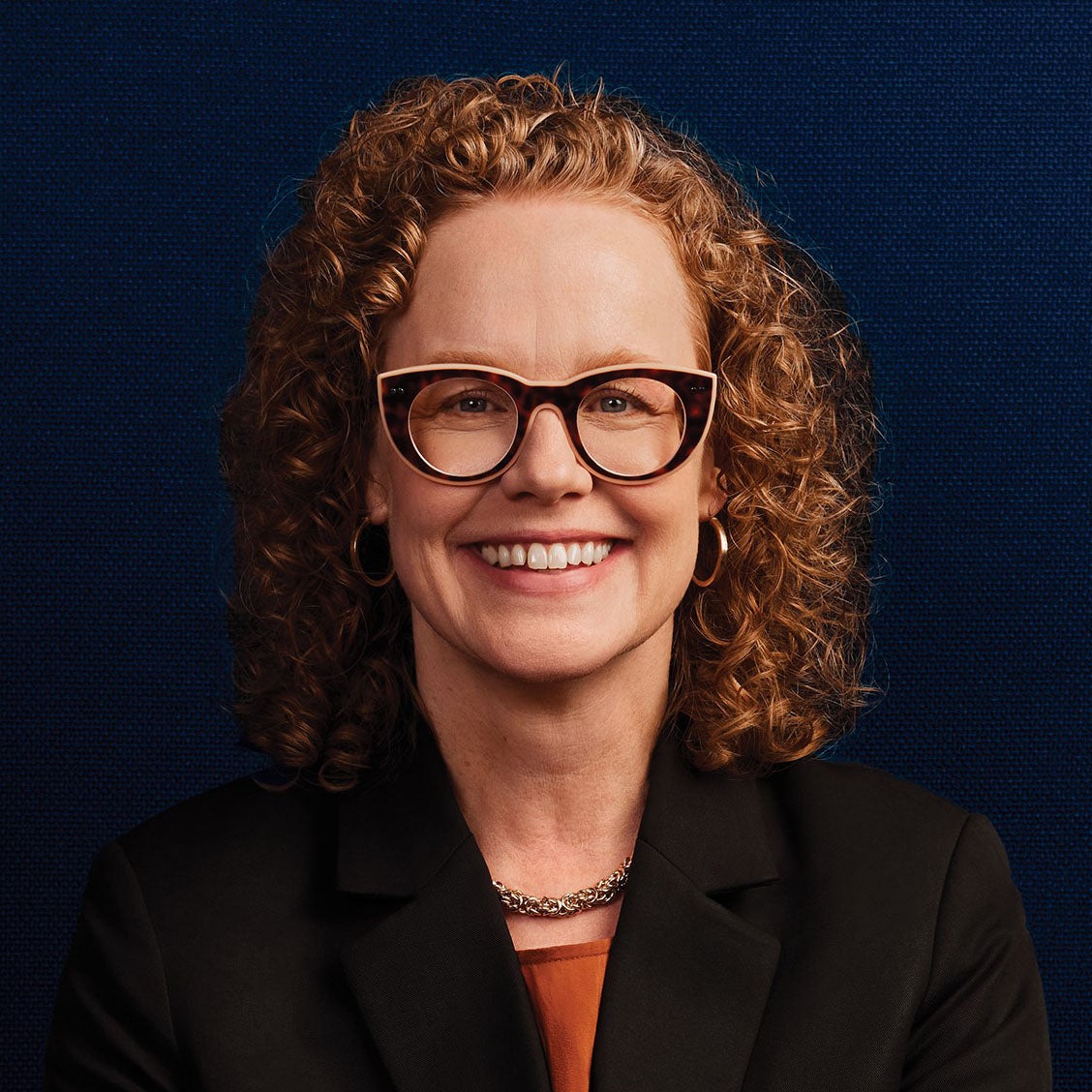
Photo credit: Michael Starghill
In March, the intersection of artificial intelligence, clinical practice, and humanistic inquiry was front and center as Dr. Kirsten Ostherr, Director of the Medical Humanities Research Institute and Gladys Louise Fox Professor of English at Rice University, delivered a keynote address at the Linguistic Analysis for Health (HeaLing) workshop.
The workshop, held in conjunction with the European Chapter of the Association for Computational Linguistics (EACL) 2026 conference from March 24th-29th, invited scholars from across medicine, humanities, the social sciences, and the computational sciences. The goal of the conference was to “foster dialogue around the unique challenges and opportunities of applying computational linguistic approaches to medicine-related data.” In providing a space for and nurturing this multidisciplinary collaboration, the HeaLing Workshop marks a significant step forward towards addressing the promises and ethical pitfalls of computational tools in healthcare.
Recognized internationally for her substantial work in the medical humanities, Dr. Ostherr was invited to anchor the event and offer her invaluable perspective at the intersection of health communication, AI, and linguistics. Dr. Ostherr emphasizes that as Natural Language Processing (NLP) and large language models increasingly permeate medical research and health communication, it is essential to determine how computational linguistic techniques can be rigorously applied to biomedical data in ways that center the human element of medicine. Historically, qualitative discourse analysis has been used to understand the construction and consequences of language in medicine. The advancement of AI, however, has resulted in powerful quantitative tools and methods that promise to facilitate research work on an unprecedented scale. At the same time, the value of derived insights depends entirely on a careful alignment between hypotheses, chosen methods, and interpretable outputs. Without robust evaluation and oversight structures, computational analyses risk obscuring the very concepts they aim to clarify. Doing so can potentially reinforce stigmatization or obfuscate the link between social determinants and health outcomes.
Her address explored how the patient experience is shaped by the language employed by stakeholders, the ever-advancing technology integrated into care, and the continuous flow of data between the clinical and research spheres. Dr. Ostherr highlighted the necessity of centering patients in discussions regarding the deployment of digital health technologies in an equitable and ethical manner. Her insights provided a critical framework for computational linguists and informed the translation of raw language data analyses outcomes into actionable, impactful clinical decisions.
Dr. Ostherr’s participation in the HeaLing workshop reinforces Rice’s Medical Humanities Research Institute’s ongoing commitment to ensuring that health technologies are designed with the human in mind. By taking a proactive approach to shaping the discourse on healthcare AI, MHRI continues to champion a future where technology enhances outcomes and minimizes disparities. Published proceedings from the workshop are available here.