
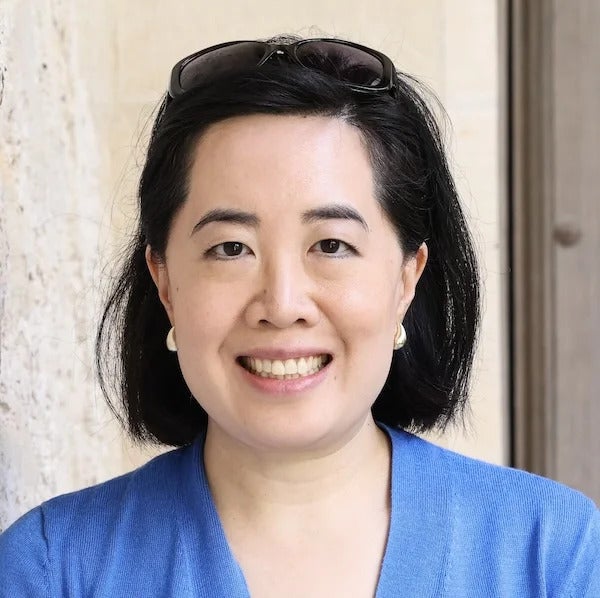
What did you do before coming to Rice?
I taught at the University of Texas at San Antonio in the year before coming to Rice, and at the University of Sydney for 9 years before that.
What is a quirky aspect of Rice that you enjoy?
I love that Rice has a student-run bike shop (Rice Bikes) near the center of campus. A few months ago, I got a flat tire and the students at Rice Bikes were able to repair my bike quickly and inexpensively!
What is your current research project?
I have been working on a book manuscript on prison food in the United States, focusing on the mass incarceration era from the 1970s to the present. The manuscript covers pretty much every aspect of prison food, including health and nutrition, as well as the history, politics, economics, and culture of American prison food. Using a variety of primary sources (e.g. prison newspapers, government archives, and audits of prison food services contracts), I analyze prison food in relation to issues of hunger, inequality, and violence in the U.S. carceral state, and emphasize its significance to understanding incarcerated people’s experiences (including their agency), how the prison industrial complex works, and some of the largely unnoticed, but enormously consequential, developments in the mass incarceration era (e.g. the privatization of prison food services).
How did you become interested in medical humanities?
I first became interested in medical humanities after taking a seminar called “Race and Medicine” with the medical anthropologist Carolyn Rouse in my first year of graduate school. I then decided to complete one of my graduate school general exams (to prepare one to teach in particular fields of study) in the history of medicine, and have been involved in the health humanities in one way or another since.
What is a favorite moment from one of your medical humanities classes?
So far I have only completed teaching one medical humanities course at Rice – MDHM 238 (Food and Health in America). In one class, I was providing some context on a reading by displaying the author’s photo on a lecture slide. I mentioned that this author had written a book about shrooms (and psychedelics more broadly), and one student quipped that the author looked like someone who would write a book on that topic. I followed up by asking the student why they would make such an inference, and the student replied, “I don’t know. He just looks like someone who would use shrooms. He looks happy.” Everyone laughed. This might seem like a strange moment to highlight as a favorite, but I think this exchange captured the easy rapport that had been established in that small and relatively informal class. The student’s comment was harmless; it certainly wasn’t expressed in a way that would be considered offensive or mean-spirited, and I’m glad they felt comfortable making it.
What is something surprising about you that our readers might not know?
Running has been an important part of my life for many years, and in the two years between college and graduate school, I was an assistant cross-country and indoor track coach at a high school in Massachusetts.
Photo by Marie Etchegoyen