
Medical Humanities Research Showcase
The Medical Humanities Program held a Medical Humanities Research Showcase on April 9, 2024. Undergraduate students in practicum courses, including a study-abroad opportunity in Spain, presented their research projects to a public audience. Faculty and staff from the Texas Medical Center with a history of engagement in aspects of medical humanities served as judges to determine first, second, and honorable mention award recipients, whose abstracts are included below. The showcase also featured a group presentation by students working with the Institute for Spirituality and Health to investigate medical school training in understanding the ways spirituality can affect patient experiences and decisions as well as provider well-being. Students in the class, “Experiences of Health and Illness: Pain,” also shared their ideas for robust and multi-faceted alternatives to the existing pain scales that ask patients to rate their pain from one to ten.
First Prize - Kristen Hall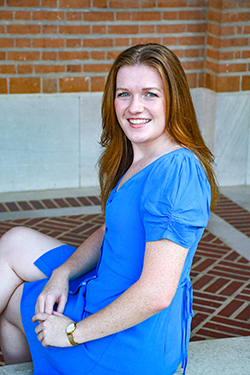
Bridging Perspectives: Shifting the Lens Between Western Medicine and Traditional Chinese Medicine
This project seeks to investigate the perspectives of Traditional Chinese Medicine (TCM) practitioners towards Western medicine, aiming to elucidate the disparities between these medical paradigms and identify avenues for improvement in Western healthcare. While Western medicine adopts a biomedical approach to treat existing pathogens, TCM emphasizes wellness promotion and preventative measures. Although these distinctions have been explored academically, Western practitioners are often taught to assess these differences from a Western lens, if at all. How does TCM view Western medicine, and how can those views enrich both practitioner understanding and educational discourse? I seek to answer this question in a personal narrative chronicling my experiences at the American College of Acupuncture and Oriental Medicine, presented as a publicly available online memoir. Drawing from patient interviews, personal observations, and physician dialogues, this narrative reflects on medical practices and challenges readers to reexamine their views towards both TCM and Western medicine. I aim to offer insights into potential shortcomings within Western healthcare, how TCM addresses these gaps, and implications for enhancing patient care protocols, particularly pertinent to aspiring Western medical students and EMT practitioners. By highlighting diverse perspectives on healthcare, this work fosters critical reflection, potentially inspiring improvements in patient care practices and fostering interdisciplinary dialogue between Western medicine and TCM.
Spring 2024 semester, MDHM 430 Medical Humanities Practicum (Dr. Melissa Bailar)
Second Prize - Audrey Ma
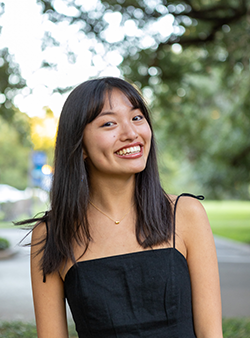
Beyond the Pricking and Prodding: Personalizing Acupuncture on the Practitioner-Patient Level
Modern American comprehension of Chinese medicine is wrought with misconceptions based in long-imbedded perceptions of China as an eccentric nation. When Mao Zedong re-incorporated Chinese medicine into China’s infrastructure, he also legitimized it with empirical research. Ironically, its appeal to the West was not from its proven clinical efficacy, but instead its ‘mystical’ ability to bring individuals closer to the forces of life, reflecting an orientalist tendency to create an image of China that was antithetical and inferior. This has endured into the present day, which sees clinics catering to the biased expectations of the populations they serve. When I shadowed at the American College of Acupuncture and Oriental Medicine (ACAOM), I wasn’t surprised to see lanterns or hear folk music. I did, however, want to answer the less-considered question of how practitioners deconstruct their patients’ pre-existing assumptions to foster trust and mutual understanding, which encourages a less narrow-minded impression of Chinese medicine among the general public. To this aim, I interviewed acupuncturists at ACAOM and its Methodist branches and integrated their perspectives into a presentation for ACAOM students/faculty. I also created a picture book that visualizes existing prejudices against Chinese medicine. These projects will hopefully enhance mindfulness about the intentional and unintentional minimization of Chinese medicine in American society, and help undo it, starting with the interpersonal.
Spring 2024 semester, MDHM 430 Medical Humanities Practicum (Dr. Melissa Bailar)
Honorable Mention - Maggie Han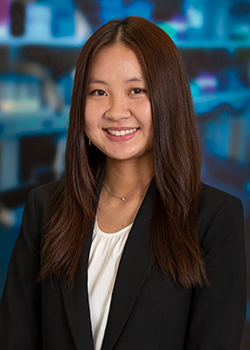
Environmental Scan of Housing First Communities for At-Risk Veterans Using Windshield Surveys
Housing instability is associated with a wide range of adverse health outcomes including increased risk of chronic illnesses and mental health disorders. Initiatives like Housing First, an approach prioritizing providing permanent housing to homeless individuals before addressing issues such as healthcare access and quality of life, are being implemented to help improve the stability of veterans. In Houston, federal programs, such as Housing and Urban Development–Veterans Affairs Supportive Housing (HUD-VASH) and Grants and Per Diem (GPD), have contributed greatly towards effectively ending veteran homelessness. However, there are currently no studies that examine the conditions and environmental context of these veteran housing communities. Thus, this project aims to conduct a community assessment of three different veteran housing sites in Houston (Tunnels to Towers Veteran Village, Travis St. Plaza, and The Warrior’s Refuge). Windshield surveys, which entail systematic observations of a community made from a moving vehicle, were created and conducted at each site. These observations were combined with census data to generate maps using geographic information system (GIS) software. By mapping the housing sites and neighborhood resources, a foundation can be laid for future research to explore the correlation between veteran health inequities and neighborhood settings.
Academic Year 2023-24, Health Humanism and Society Scholars Practicum (Dr. Beverly Mitchell)