
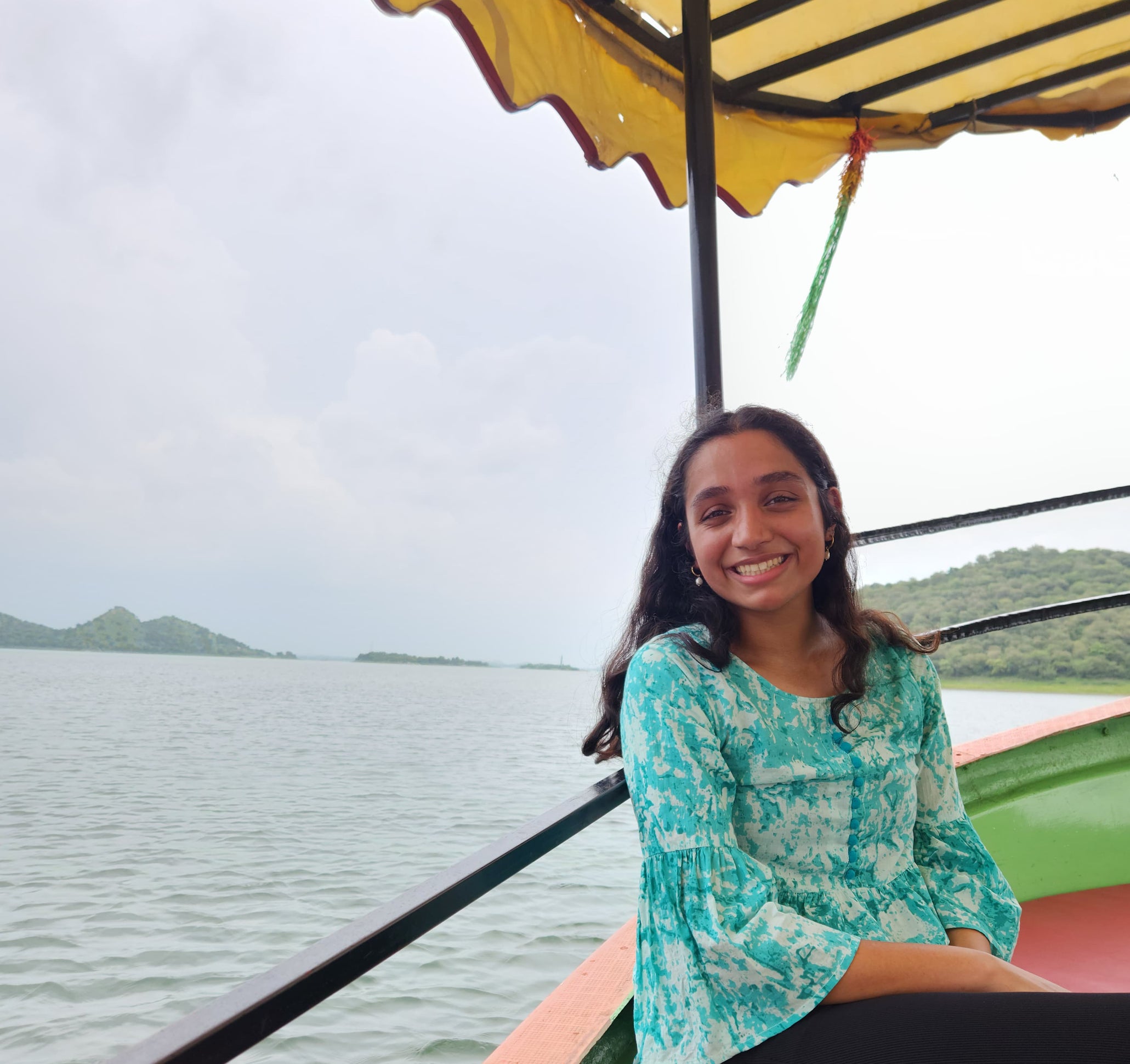
This semester, we're featuring Maya Harpavat, a senior in the Rice Medical Humanities program. Maya was a recipient of the prestigious Center for Civic Leadership Wagoner Fellowship, which she used to travel to India to conduct medical humanities research on malnutrition and community health. We sat down with her to learn more about her journey, her work, and her advice for other students.
What drew you to the Medical Humanities program at Rice?
I actually knew I wanted to minor in Medical Humanities before I even started at Rice. I’ve always been passionate about a variety of subjects, including nutrition, public health, and creative writing, as well as reading historical narratives. The medical humanities minor seemed like the perfect way to combine these interests.
The introductory course was a key experience for me. I vividly remember a lecture from Dr. Marcia Brennan about her work with end-of-life care and writing patient stories at MD Anderson Cancer Center. It was incredibly powerful and made me want to be part of something similar. However, the most transformative class I've taken was Creative Writing for the Medical Humanities with Professor Cameron Hammon. We studied medical narratives, wrote our own stories, and workshopped them, which really solidified my interest in the field.
You spent this past summer in India on a Wagoner Fellowship. What inspired that project?
The project felt like a culmination of everything I had been studying and a step toward what I want to do in the future. My inspiration didn't come from one specific research project but was more of a combination of my classes and mentors. Courses like Principles of Public and Community Health with Dr. Cassandra Diep and my various writing and medical humanities classes all played a role.
My experience in India actually began the winter before my fellowship. I received funding from the Moody Opportunity Fund to travel there to observe how medicine and the humanities intersect. While working in a general hospital, I was shocked by the high rates of malnutrition in children, which is something I hadn't seen in the U.S. My research at Rice with Dr. Shreela Sharma (UT School of Public Health) has focused on hypertension and obesity, so seeing this completely different public health challenge fascinated me. I became very curious about the root causes—was it an issue of access to resources, or was it a more fundamental difference in thinking about nutrition?
Finding an international research partner can be daunting. How did you connect with the organization in India?
It happened mostly by chance! During my winter trip, about a week before I left, I did a simple online search for local non-profits working on malnutrition. I came across an organization called Seva Mandir, and after exploring their website, I was immediately impressed. I sent out a few cold emails to different organizations, and Seva Mandir was the one that responded.
They invited me for a site visit while I was still there, and I spent a whole day with them in a remote village—the same one I would later return to for my Wagoner project. What really stood out to me was how deeply integrated the organization was within the community. Their approach was not about implementing their own ideas, but about listening to the community and learning from them first. I came back to Houston but couldn't stop thinking about their work, so I emailed them and asked if I could work with them over the summer. They agreed, and I then successfully applied for funding through the Wagoner Fellowship, the Mentor Summer Scholars Program, and a stipend from the Kinesiology department.
What did your research process look like on the ground?
I spent the spring semester of my junior year working with my mentors at Rice, Dr. Melissa Bailar and Dr. Cassandra Diep, to develop a detailed questionnaire. Once I returned to India, I spent over two months in the community conducting surveys. I asked people questions to gauge their awareness of malnutrition, what they believed its causes were, and what they had eaten in the last 24 hours to get a sense of their food intake.
What advice do you have for other students who want to pursue similar research opportunities?
My main pieces of advice would be:
- Don't be afraid to put yourself out there. It can be daunting, but a simple cold email can open doors. Talk to students who have already done what you want to do; they are a great resource and can support you through the process.
- Lean on your mentors and the resources at Rice. I am forever grateful for my mentors who were willing to read my proposals and discuss ideas with me. The Center for Civic Leadership (CCL) is also a fantastic resource. They are very well-connected with international organizations and can help you find opportunities.
- Follow your passion. Don't just pick a topic because you think it will look good on a resume. If you choose something you are genuinely curious and passionate about, that will shine through in your applications and conversations.
What's next for you after graduation?
I’m currently planning on taking a gap year before medical school. I hope to continue researching and understanding public health nutrition, whether in the U.S. or internationally. I would love to connect with anyone in the field who reads this and learn from their experience!