
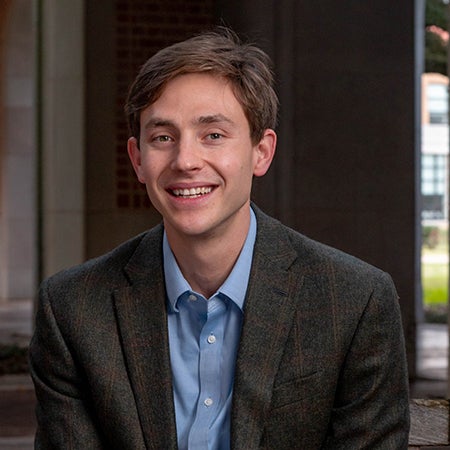
Dr. Samuel Reis-Dennis is an Associate Professor in the Department of Philosophy and in the Medical Humanities Program. He serves as a Steering Committee member of both the Medical Humanities Research Institute and the Medical Humanities Program at Rice. His work bridges the worlds of theoretical philosophy and the clinical space, with a focus on normative ethics, moral psychology, and bioethics. He has previously served as Assistant Professor and Clinical Ethics Consultant at Albany Medical Center and currently serves as the Director of Graduate Studies of the Department of Philosophy.
What are your current research project(s)?
One major theme of my recent work in medical ethics has been the importance of establishing ethical rules that protect patients’ rights. It may come as a surprise to some readers to learn that such rules and principles have fallen out of favor among bioethicists. In fact, in a recent survey, deontology—an ethic according to which right action consists in behaving in accordance with a system of rules and principles—was found to be the least accepted major approach to ethical theory, trailing consequentialism, “principlism,” virtue ethics, and the ethics of care. Interest in rules is seen, I think, as excessively legalistic and rigid. Instead, bioethicists would prefer that we make decisions by calculating expected consequences, exercising practical wisdom within specific contexts, or by balancing various competing principles. While such flexibility may seem appealing, especially to physicians who are accustomed to weighing risks and benefits in clinical reasoning, I believe that the rejection of rules is dangerous for patients. I argue that medical ethicists must maintain our conviction in the absolute right of all patients and research subjects to be respected as dignified human beings and our collective will to develop rules and principles that interpret, express, and defend this basic moral entitlement.
How has your work evolved over the course of your career?
I’ve always been determined to ask (and try to answer) philosophical questions that arise and matter in everyday life, but when I began graduate school, I didn’t think my research would ever make much of a practical difference. That changed when I started working in a clinical setting—I was a clinical ethics consultant for five years—and writing about medical ethics. Working in hospitals exposed me to so many gripping and urgent research questions that called for philosophical clarity and conviction. Just as importantly, it gave me a new sense of the importance of philosophical thinking, teaching, and writing. I saw the ways in which specific philosophical research programs had found expression in real-life hospital policy and in medical school curricula. Academic ethical theory really made a difference to the way our healthcare system developed over the past 50 years or so—sometimes for the better, sometimes not. Witnessing the effects of different philosophical systems on patient care—that is, on life-and-death medical choices—changed my idea of what it means to do intellectually and ethically serious research in medical ethics.
How has your research impacted the way you teach your classes?
There are so many difficult and deep questions in medical ethics that it would be impossible to cover them all in a single semester. One has to pick and choose. When I decide which topics to cover in my courses, I like to give my students some sense of the issues that I find most challenging and exciting. Of course, I try my best to avoid steering them toward the specific conclusions that I’ve reached in my research, but I think that students appreciate getting a chance to learn about issues that their professors are passionate about. For example, I’ve written a couple of articles about scarce resource allocation. After having my students do a resource-allocation exercise, I show them what I’ve written on the topic and share a paper that explains how I actually completed the allocation task the exercise simulates. I really enjoy seeing the allocation systems they come up with and I think they enjoy seeing my approach to the problem, too.
What are some misconceptions that students, patients and their families, or care providers may have about bioethicists in the clinical environment?I don’t think that many students, patients, and families know that almost every major hospital in the United States has an ethics consultation service. When I was a clinical ethicist, most of the calls I received came from members of the medical team, but some of the most interesting cases I consulted on originated with calls from patients and family members. It’s a good thing to know about! One word of caution, though: the clinical ethicist role is different from the role of a patient advocate. In most major hospitals, the ethicist strives to go into every case as a neutral party before collecting the facts and then making a concrete recommendation.