
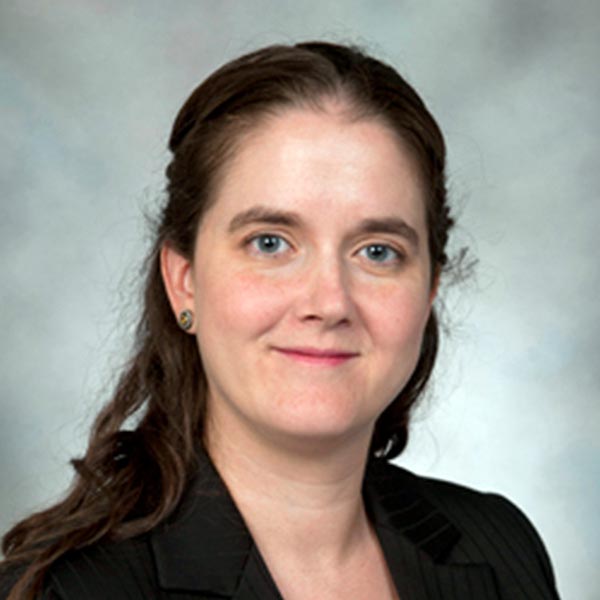
Dr. Kirstin R. W. Matthews is a Fellow in Science and Technology Policy at Rice University’s Baker Institute for Public Policy and the Director of the Baker Institute’s Science and Technology Policy Program. As a steering committee member of the Medical Humanities Research Institute, Dr. Matthews has mentored MHRI fellows on medical humanities research projects on medical interpreter narratives as well as medical freedom. She also serves as an investigator for the National Endowment of Humanities joint Center for Humanities-based Health Artificial intelligence and Innovation (CHHAIN) with Baylor College of Medicine.
Her research focuses on the intersection of traditional biomedical research and public policy, addressing the ethical and regulatory challenges associated with emerging biotechnologies, including vaccines, stem cells, and genomic medicine. In this exchange with Dr. Matthews we discussed the changing landscape of health policy, the importance of federal funding, and the ethical dimensions of scientific research.
Is there anything you'd like to tell us about your current project(s)?
I work on a variety of projects related to health and bioscience policy. One aspect is to look at ethical and regulatory challenges associated with the development and implementation of novel biotechnologies that use synthetic biology (the manipulation of DNA in cells and microbes to gain new functions). Another project is focused on understanding how new efforts to increase medical autonomy and decision making are leading to increased misinformation and even attacks against public health initiatives. I'm also interested in why people oppose vaccines.
How has your work evolved since the start of the COVID-19 pandemic?
How society views scientific research and challenges existing norms has changed since the pandemic. We see increased promotion of medical freedom or an opposition to government programs from vaccine mandates to regulatory oversight of new drugs. There is also a lot of misinformation about and harassment of scientists who do public health research. We have seen this for years with climate research, but the politicalization of public health is new. This seems to be a result of restrictions during the pandemic, but also political actors using these issues for personal gains.
As the Director of the Baker Institute Science and Technology Policy Program, can you shed light on recent cuts to medical and scientific federal research funding and the broader relationship between politics and science?
Over the past year, science has become more and more politicized. We have seen a lot of distortion of facts, misinterpretations and people outright ignoring data. It's very concerning to those promoting science as a public good. Scientific research is the backbone of US innovation and federal funding for research makes that possible. It was funding from the Department of Defense that created the internet. A grant from the National Science Foundation helped two researchers develop the algorithm that ultimately led to Google. Another NSF grant on bacteria led to the discovery of CRISPR which is revolutionizing biomedical research and medicine. While policy decisions cannot be made by science alone -- other factors such as ethics, economics and access should be considered as well -- decision-making should use accurate scientific evidence.
You track the issues faced by a variety of stakeholders in the realm of emerging biotechnologies. Although patients and physicians immediately come to mind, are there other stakeholders who play a role in translating therapeutic solutions from the lab to the bedside?
There are a lot of stakeholders to consider for emerging biotechnologies. Generally, stakeholders include the researchers, developers, industry leaders, regulators, and interested publics that might support or oppose the research. For medicine, it's appropriate to talk with the patients and patient advocate groups as well as those who might be opposed to the technology for philosophical, moral or religious reasons. For technologies that impact the environment, it's important to ensure those communities who are affected should be a major player in the discussion.
What effect do you believe the pandemic had on the working dynamic between medical interpreters and patient care teams?
Medical interpreters' work is often misunderstood and under-valued. Medical interpreters not only relay information between the care team and the patient, they also ensure that the information is understood, culturally appropriate and sensitive. These things cannot be replicated by AI or an app. Ideally, medical interpreters work with the health care team to ensure that the patients are fully informed and can give appropriate consent to their treatment.
How has your research impacted how you teach your classes?
I teach a class BIOS370, which specifically focuses on health policy and helps students write policy briefs and develop actionable policy recommendations. I use what I have learned from my research and work to encourage new policies for the course.
Many pre-med students learn about the ethical dimensions of medicine through historical cases like the Tuskegee Syphilis Study. What do you think is most important for students to understand about the history of medical research?
I think it's vitally important for students to understand the social context of how science is conducted. Prior to taking BIOS 447, which I co-teach with Dan Wagner, students often see ethics as a list of things to not do or paperwork to be filled out before you can do research. During the course, we highlight why we need to think about ethics and how it impacts what research we do, what populations we chose to help and which ones we do not, what areas we fund and which we do not. For example, the field of human embryo research is moving forward quickly, but the U.S. government has determined not to fund this work with federal dollars. Instead, we focus those funds on other areas such as understanding early embryo development using cells lines, identifying genes associated with cancers, and developing and testing new treatments.