
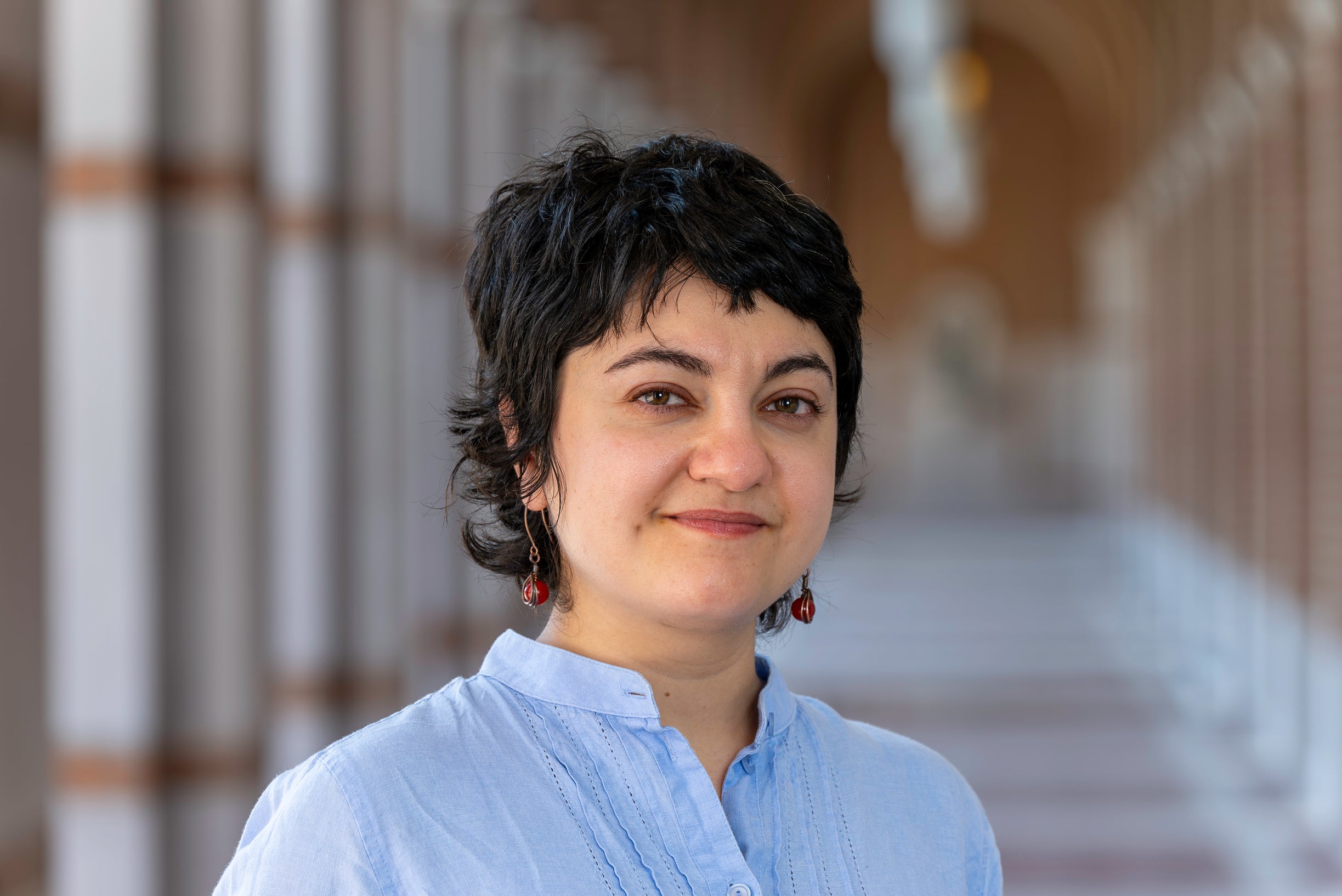
Samin Rashidbeigi, PhD, joined Rice University in 2024 as the Sawyer Seminar Postdoctoral Fellow in Medical Humanities.Samin was the recipient of the Malcolm H. Kerr Dissertation Award (2024 Honorable Mention in Social Sciences) by the Middle East Studies Association. Samin received her PhD from Princeton University in the Department of Near Eastern Studies under the supervision of Behrooz Ghamar-Tabrizi. A description of her dissertation, “Convictions and Persuasions: Transfusion Technology and the Blood Donor in Modern Iran,” can be found here.
After you received your PhD from Princeton University and two Masters degrees from Oxford and Central European University, you came to Rice University. What most surprised you about Houston?
Well about the city of Houston, and more specifically the neighborhoods around campus, I have to say I am struck by the number of old giant trees in the area. On my way to campus, I walk through several streets where the branches of these beautiful trees almost form a canopy overhead. The other thing that I registered early on is how Houstonians are serious about house decorations. I have seen some incredibly high-tech Halloween and Christmas decorations around, unlike anything I’ve seen elsewhere!
You joined the Medical Humanities Research Institute’s Sawyer Seminar on “Reimagining Technologies of Care: Racial Health Equity and Data Justice,” funded by the Andrew W. Mellon Foundation. What has been your favorite aspect of this year-long series of activities?
I deeply appreciate the opportunity to engage with diverse groups through the Seminar. In our reading group, we have physicians and medical students alongside Rice undergraduate and graduate students, as well as faculty members. Our guest speakers also come from varied backgrounds—beyond academics, we’ve had policymakers and activists giving talks. These interactions have been profoundly refreshing for me.
After a few months of participating with the Seminar, I am finding myself thinking about topics that were simply absent from my historical imagination. For example, “data” and particularly “medical data” as a category of analysis. Well, I am coming from a historical training that heavily subscribed to “everything is socially constructed” and “there is no such thing as objectivity,” but to be honest, I was not actively curious about data as a theme. Now after a few months of thinking with the Seminar participants, it’s difficult for me to come across the term in my research and not think about the human dimension of data.
What is your current research project?
I am studying the history of blood transfusion and blood donation in Iran. My research examines the historical processes that motivated ordinary people to donate blood for the benefit of complete strangers. Iran is a particularly interesting case for exploring the incentives and attitudes surrounding blood donation from a historical perspective. Today, the country has a well-functioning national blood service with high rates of blood donation, but this was not always the case. During the 1960s and 1970s, voluntary blood donation was so low that a blood market, sustained by urban poor and blood dealers, supported medical facilities. My study focuses on what changed public attitudes toward blood donation over the course of roughly fifty years and what the history of blood donation reveals about the relationship between ordinary people, medical technology, and the theme of trust.
You’ve been mentoring undergraduate and graduate students affiliated with the Sawyer Seminar. What has been a favorite mentoring moment?
Our two undergraduate fellows, Scott Kuh and Nayna Nambiar, are doing an incredible job interviewing our guest speakers. As part of the preparation, we collaborate on writing and discussing the questions beforehand, but I do not directly participate in the interviews themselves. Each time I listen to the completed interviews, I feel extremely proud of Scott and Nayna—how smoothly they moderate the conversation, how adeptly they adjust the questions on the spot, and how thoughtfully they engage and brainstorm with the interviewee.
If you weren’t a scholar in medical humanities, what would you be doing instead?
In another life, I could see myself as either a journalist or a social worker!