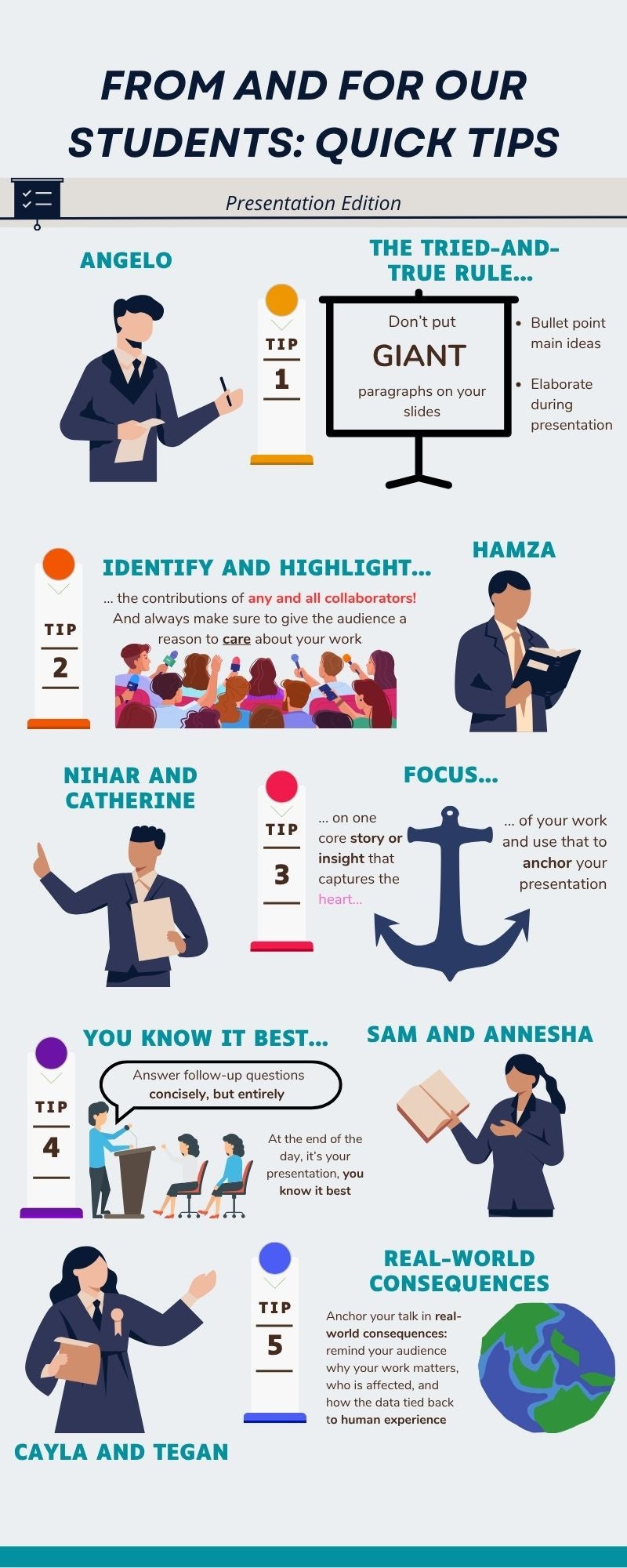
Medical Humanities Research Showcase
Setting up a study is only half the story of a research project – what we emphasize to our students is that it doesn’t just matter what you do, but how you convey your work to your peers, collaborators, and the greater community. Fortunately, our students happen to excel at both sides of the equation and proved that during Humanities Days, a two-day event held by the Rice University School of Humanities. The first day of the event was devoted entirely to medical humanities students, who shared their work through oral presentations, research posters, and mixed media installations.
Focus #1: Emphasizing Human-Centered Care for Everyone
Although a typical pre-med education may focus only on the technical aspects of patient care, meaningful exposure to the patient experience is instrumental to the development of a well-rounded, caring provider. Closing the gap that can form between a patient and their provider team, whether it be as a result of communication challenges, cultural barriers, or differing treatment philosophies, should be the goal of any comprehensive medical education. Facilitated by the Medical Humanities program and TMC collaborators, Rice students have explored and demonstrated the vitality of including patients in not only the treatment plan, but in the process of tackling the issues faced by both patients and providers in the clinical setting. Angelo Chen and the team from the Clinical Immersion and Health Inequities Program presented unique perspectives on the human element of care at the showcase, with each project exemplifying why a humanistic approach to improving the healthcare world is so crucial.
Angelo Chen
“Impact of Narratives from Pediatric ICU Patients on Medical Provider Perspectives on Care”
How does knowing more about a patient’s non-medical life impact care outcomes? How would you feel if you were in the care of a provider who understood your values and what mattered to you? These are the questions that Angelo Chen investigated in his oral presentation on patient narratives, which he defines as “a descriptive account of a patient’s life experiences, offering a look into their values, preferences, and needs.” After crafting and sharing stories focused on the hobbies, dreams, and goals of pediatric ICU patients, Angelo evaluated shifts in provider perspective and care approach. The results? Positive for patients, providers, and Angelo himself, who made progress towards his career goal of humanizing care by making patients feel understood by their providers outside of a medical context, earning him 1st at the showcase in Oral Presentation.
The Medical Humanities Program taught me how to understand and give respect to patient voices and stories, which impacts how I approach and document the stories of the patients I work with.
Also Presented At: Rice-TMC Medical Humanities Research Event, Sawyer Seminar Research Symposium
Hamza Saeed, Sanjay Soni, Andrew Sun, Priyanka Subramanian
“Clinical Immersion as a Catalyst for Equity-Driven Healthcare Innovations”
| Through a NIH-funded collaboration between Rice BIOE, the MHRI, Texas Children’s Hospital, and the Texas Heart Institute, this team of Rice bioengineering students investigated unmet needs in healthcare settings that exacerbated disparities in clinical outcomes. Bioengineering teams often lack clinical exposure, which can result in unintentional biases against certain patient demographics during the engineering process. By increasing student awareness of the human aspect of biotechnology and patient care, this team intends to inform future engineering work in such a way as to create better outcomes for all patients. Whether it be through developing five educational videos for BIOE senior design students on addressing bias in medical devices, developing storyboards to identify and illustrate the pressing needs of patients that often go unnoticed, or create problem spaces to serve as senior projects, Hamza, Sanjay, Andrew, and Priyanka have been doing monumental work. Their contributions were recognized with a 1st place finish in Poster Presentation! |
|
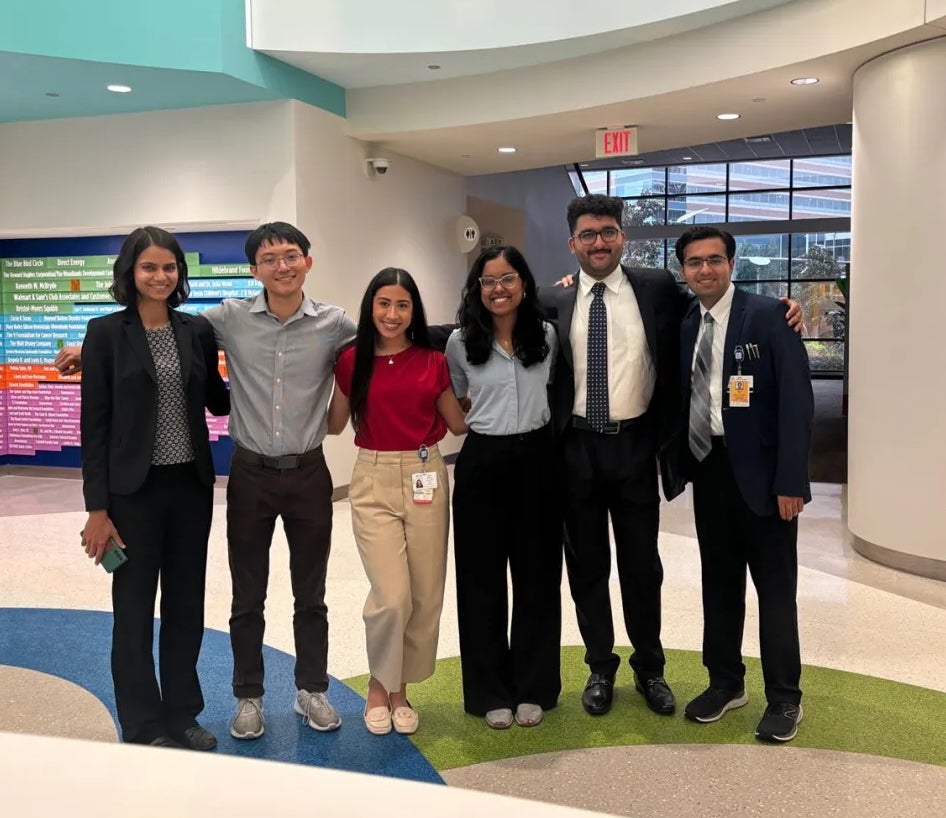
The gaps in our understanding of critical healthcare challenges were highlighted and supplemented by the humanistic teachings, resources, and support of the Medical Humanities Program!
Also Presented At: Rice-TMC Medical Humanities Research Event, Sawyer Seminar Research Symposium, Rice-TMC Innovations Symposium
Focus #2: Analyzing Who Takes Care of Us, From the Inside, Out
Our students have always taken an interest in the unconventional – now, through the application of humanities research methodologies, they can highlight the perspectives and philosophies that often get relegated to the sidelines. Nihar Shetty, Catherine Zhou, Annesha Dey, and Sam Balakishnan shine a light on the blurry line between provider, patient, and outsider. That third entity, the outsider, is particularly fascinating because of how difficult it is to define. Whether person or idea, non-traditional influences in the healthcare setting plays a significant role in a patient’s outcome. As our collective understanding of disease and how best to treat it advances and branches out from traditional Western medicine, it is up to the next generation of students to look into how best our healthcare system can integrate fresh, unconventional perspectives in such a way as to benefit all patients, regardless of demographic, background, or condition.
Nihar Shetty and Catherine Zhou
“Integration and Efficacy of Volunteer-Based Spiritual Care Services in Hospice and Long-Term Care Settings: A Mixed-Method Analysis”
| Holistic healthcare, an approach that emphasizes the physical, mental, and spiritual health of an individual, is widely acknowledged to be an effective framework for preventing and treating disease. So why is it that spiritual care is often overlooked in long-term care settings, especially when existing literature strongly links spiritual well-being to improved health outcomes? Nihar and Catherine study the integration and effectiveness of volunteer-based spiritual care services in the greater Houston area. Their goal? To work alongside the TMC-based Institute for Spirituality and Health to highlight the vitality of volunteer-based spiritual care programs in isolated, resource-limited settings. And they certainly achieved that, earning 2nd Place in Oral Presentation at the showcase. | 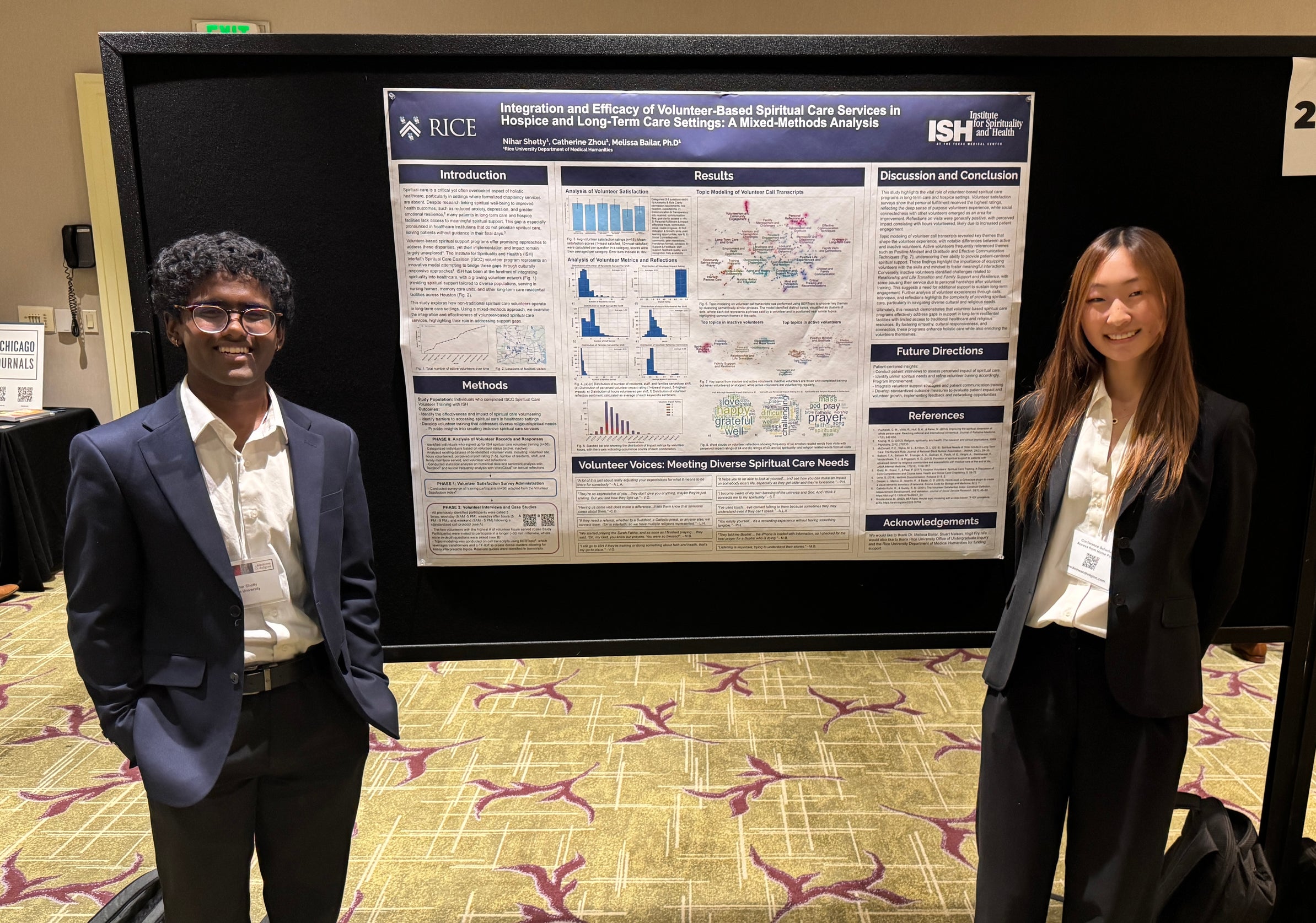 |
We left the showcase feeling inspired by the work of others and more confident in the impact of our own. If we had to sum up the experience in one sentence: The showcase was a reminder that good research doesn’t just inform—it inspires and connects.
Also Presented At: Conference on Medicine and Religion in Costa Mesa, CA, ISH Volunteer Sessions
Annesha Dey and Sam Balakrishnan
“Assessment of Family-Caregiver Collaboration in Pediatric Pain Management”
| Through their academic and professional backgrounds, including EMT service, philosophy courses, and clinical exposure, Sam and Annesha found themselves drawn to an opportunity to explore the family-provider relationship through the lens of pain. After conducting 31 interviews with both pediatric care providers and patient families, they distilled all of their observations and data into a spectacular poster (winning 2nd place in Poster Presentation!). In the context of pain management, children, particularly those below the developmental stage of speaking, are incredibly vulnerable. Through highlighting the perspectives of a diverse set of stakeholders, Annesha and Sam shed light on the current state of pain management in pediatrics and potential routes for improvement. | 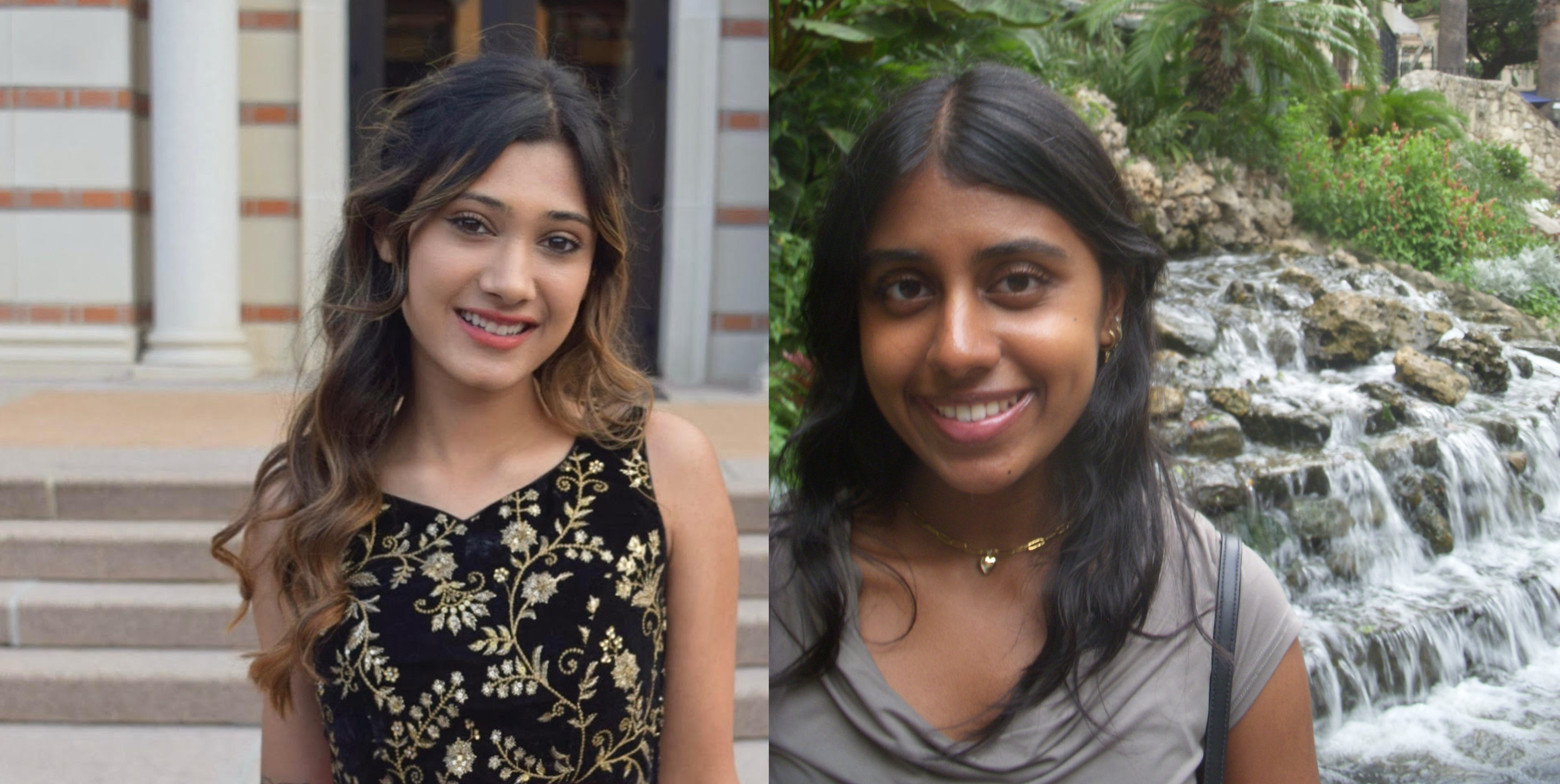
|
Presenting meant opening our work up to other’s interpretations and feedback. Surprisingly, this became my favorite part of the process. I began to see our data in a new light through the perspectives of our audience.
Also Presented At: Sawyer Seminar Research Symposium, Rice-TMC Medical Humanities Research Event, and a submitted manuscript.
Focus #3: Making the Unknown, Known
One of the most fascinating and rewarding aspects of a medical education is that everything is always changing (and hopefully for the better!). Our health does not exist in an isolated universe. Whether it be social movements, political reform, scientific advancement, or ever-changing economic winds, the healthcare industry is undergoing a constant evolution. For providers, this means that they too must adapt to the unique times they find themselves in. Advancements in our collective understanding of women’s health, psychedelic therapeutics, and non-western medicine will continue to shape our lives and the lives of our neighbors. Our students, who may one day be future providers themselves, have committed to critically examining the clinical guidelines, education, and institutional readiness today to ensure better outcomes tomorrow.
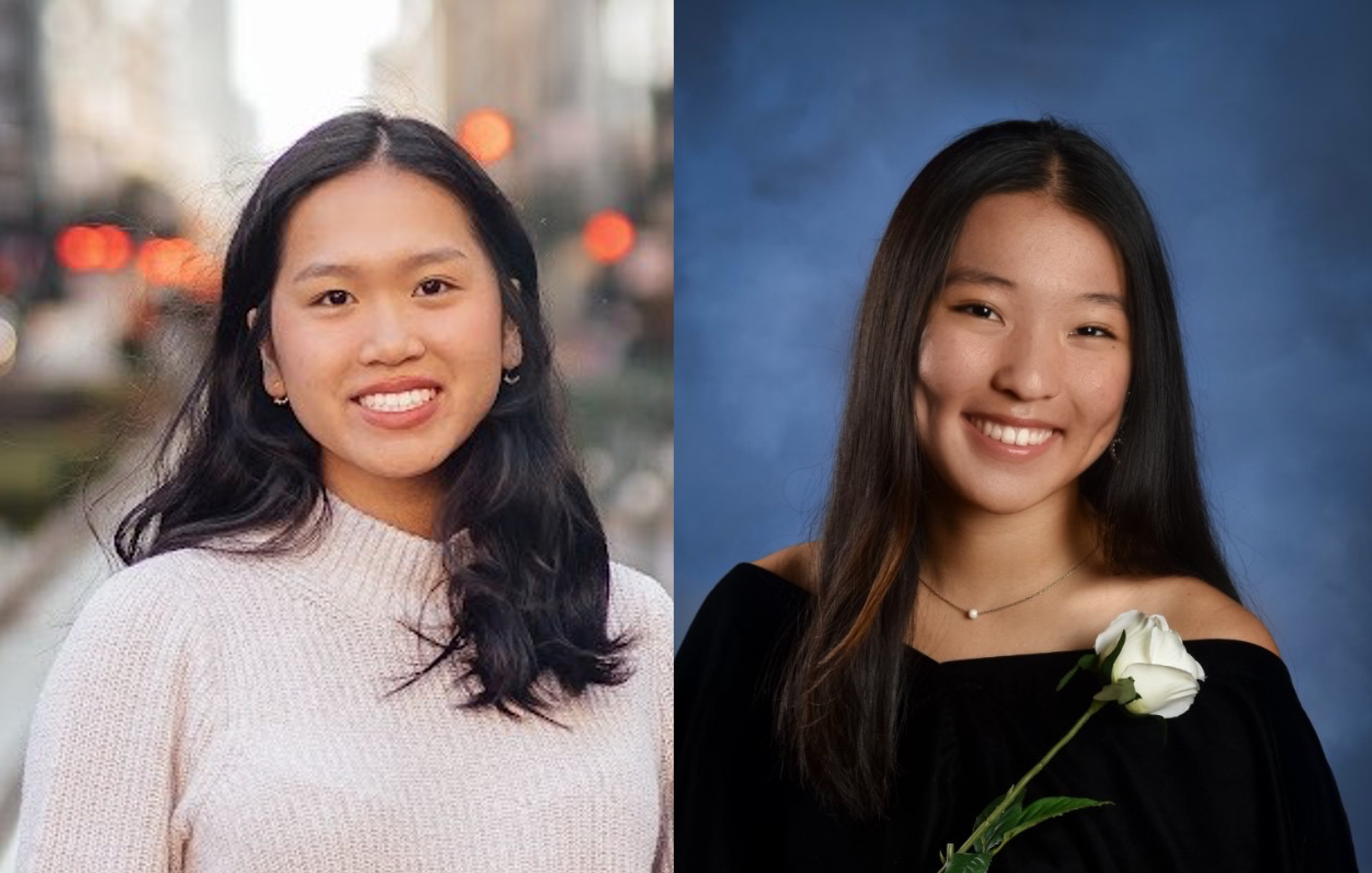
Cayla Xue and Tegan Tien
“Entanglements of Endometriosis: Biomedical Knowledge and Clinical Guidelines”
| Despite the strides made towards improving women' s health outcomes in recent decades, endometriosis remains misunderstood, underdiagnosed, and underfunded – a deadly combination. When Cayla and Tegan set out to understand and highlight the factors that contribute to why this is the case, they were struck by how long it takes to get a diagnosis and how often patient concerns are dismissed. They analyzed NIH data to show how structural decisions about what gets funded contribute to long-standing diagnostic uncertainty and a lack of development of effective treatments. One conclusion was absolutely clear: research funding isn’t just about science, but rather, about the values we collectively hold, including deep-rooted biases about gender, pain, and reproductive health. Their work was especially pertinent in a time where there are significant questions about who and what gets funded, which contributed to their 3rd place finish at the showcase. |
|
Sociology Professor Waggoner [shaped our project through] the idea of ‘undone science’ - topics that are systematically under-researched due to social, political, or institutional barriers… The Medical Humanities Program taught [us] not just to study medicine, but to question how medicine itself is constructed.
Ayra Badarpura
“Evaluating Physician Readiness for the Integration of Psychedelic Therapeutics in Clinical Settings”
| Recent results from studies that involved the use of substances such as MDMA and psilocybin indicate that psychedelic therapies show significant clinical potential. However, proper ethical guidelines must be established to ensure the safe and effective integration of psychedelics into clinical settings. Who should be allowed to prescribe these medications? With what restrictions? Ayra analyzed 18 interviews with clinical researchers conducted by the Ethical Legal Implications of Psychedelics in Society (ELIPSIS) program at Baylor College of Medicine and applied inductive codes to identify salient themes. Her research (which tied for 3rd at the showcase with Cayla and Tegan!) asks what the role of psychedelic therapies should be and how this new, innovative approach should be further explored in the research and clinical space. |
|

Pro Tips from Award-Winning Students